
Traditional Kitchen Design: What Makes It Timeless—and How to Make It Your Own
Traditional kitchens have a reputation for being formal, detailed, and sometimes a little conservative.
That description isn’t entirely wrong. But it misses what makes a good traditional kitchen work.
At its best, traditional kitchen design is less about decoration than it is about proportion, craftsmanship, architectural detail, and a sense of permanence. The room feels considered. Cabinets relate to one another. Moldings have a reason to be there. Materials have depth. Individual elements feel as though they belong to the architecture rather than simply having been installed in front of it.
And despite the name, a traditional kitchen doesn’t have to look old.
The strongest traditional kitchens borrow principles from established architecture and furniture making, then interpret them for the way people live now.
What Defines a Traditional Kitchen?
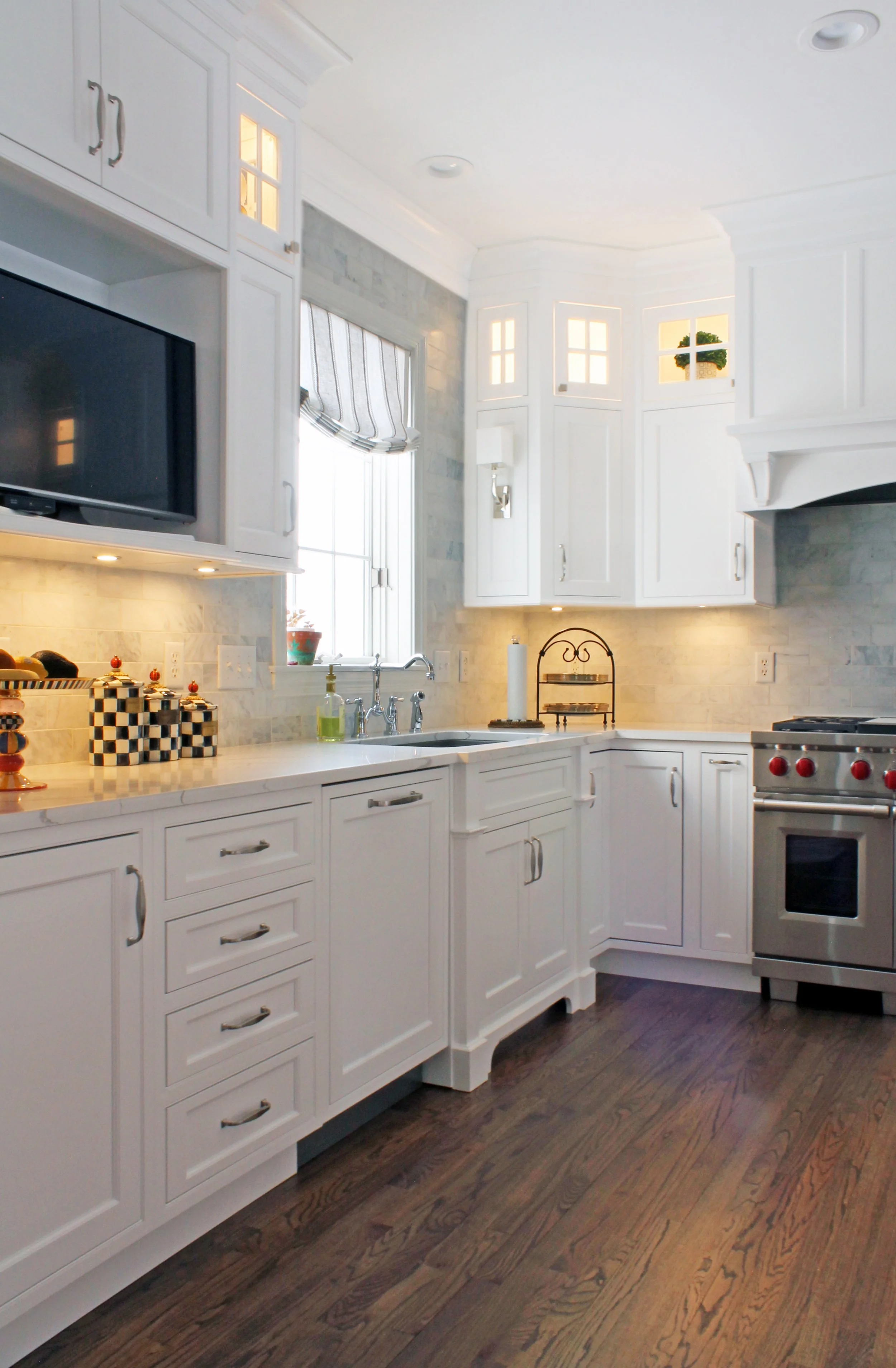
There is no single formula for traditional kitchen design.
A traditional kitchen in a Colonial home may look quite different from one influenced by Georgian, Tudor, Victorian, or European architecture. What connects them is usually an emphasis on structure and detail.
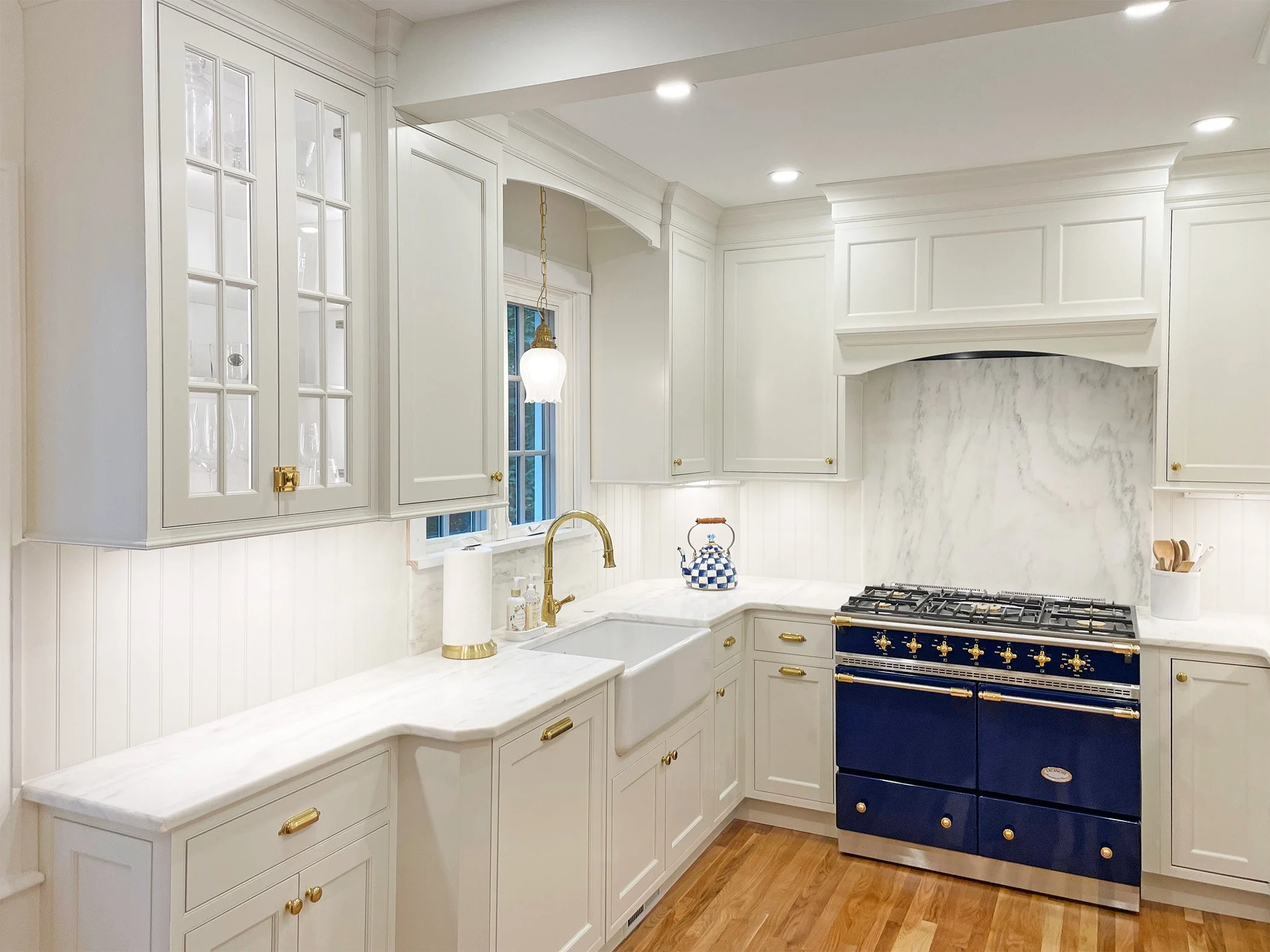
Cabinet doors often have visible frames and profiles rather than completely flat surfaces. Crown molding may connect cabinetry to the ceiling. End panels, furniture-style bases, divided glass doors, decorative hoods, and carefully composed elevations can make the cabinetry feel more architectural.
Symmetry also tends to play an important role.
That doesn’t mean every traditional kitchen has to be perfectly mirrored. But there is usually a strong sense of visual order. A range may become the center of a wall composition. Tall cabinets might anchor both ends of an elevation. An island may be designed to feel like a substantial piece of furniture rather than simply another bank of cabinetry.
The result should feel deliberate rather than busy.
Traditional Does Not Mean Ornate
One of the easiest mistakes to make with traditional design is assuming that more detail makes the room more traditional.
It doesn’t.
Raised-panel doors, elaborate crown molding, corbels, turned legs, decorative hoods, carved details, multiple cabinet finishes, ornate hardware, and heavily patterned stone can all belong in traditional design.
They do not all need to belong in the same kitchen.
In fact, restraint is often what separates a sophisticated traditional kitchen from one that feels dated.
If the architecture already contains detailed trim, substantial window casings, paneling, or other strong features, the cabinetry may need to be comparatively quiet. In a simpler house, cabinetry can carry more of the architectural character.
The question isn’t “How much traditional detail can we add?”
It’s “How much detail does this room need?”
Traditional Kitchens and the Architecture of the Home
Traditional design is particularly comfortable in houses with established architectural character.
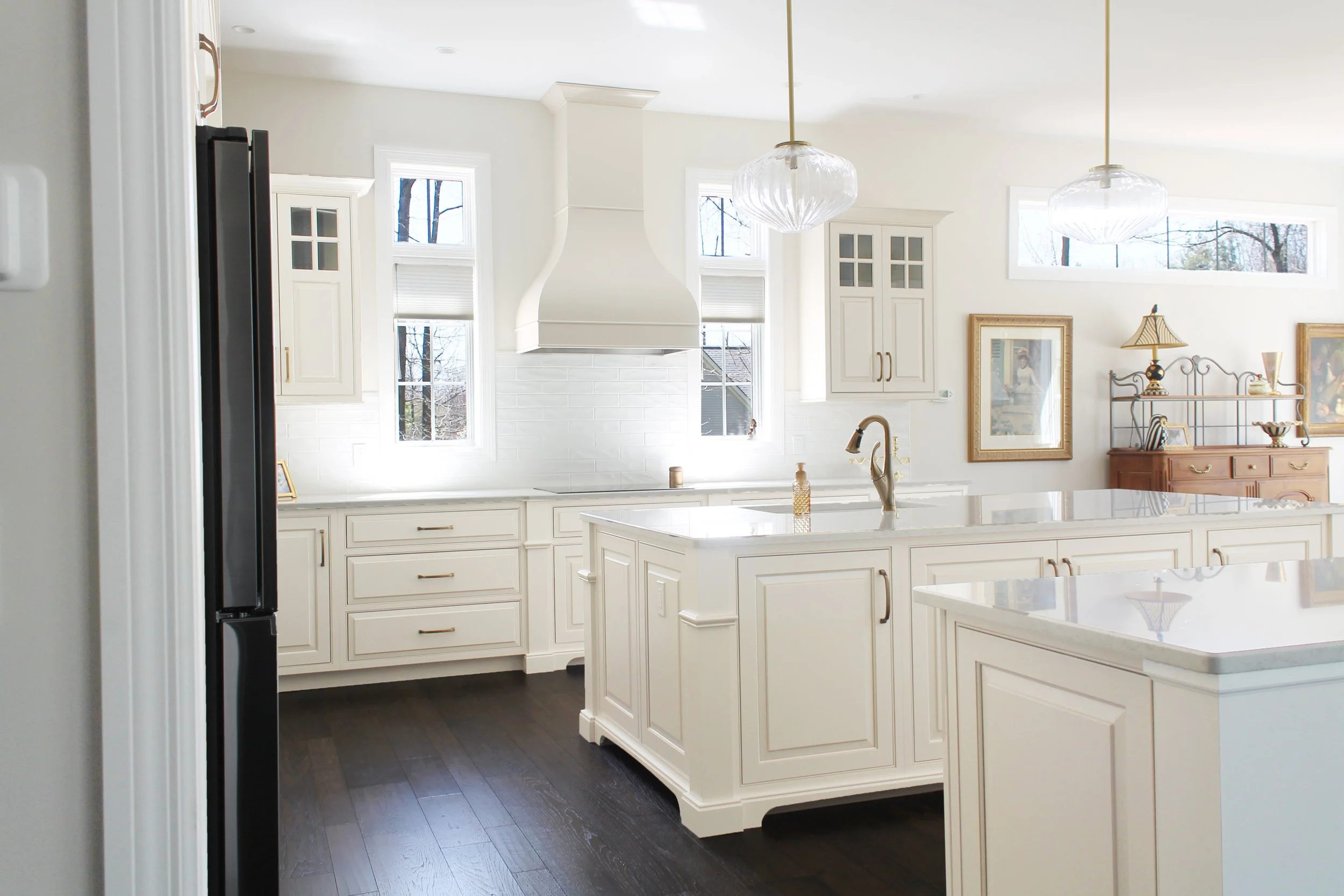
Colonial, Georgian, Federal, Tudor, Victorian, and other historic or historically influenced homes often contain proportions, trim details, flooring, windows, and room relationships that give a traditional kitchen something to respond to.
That does not mean the kitchen should become a historical reproduction.
A homeowner living in a 1920s Colonial probably doesn’t want a 1920s kitchen. They want modern refrigeration, better lighting, useful storage, large work surfaces, appropriate electrical capacity, and a layout suited to contemporary life.
The design opportunity is to introduce those things without making the new kitchen feel disconnected from the house.
That might mean matching the scale of existing trim, respecting original openings, using cabinetry with enough depth and detail to hold its own beside the architecture, or choosing materials that feel sympathetic to the rest of the home.
A good traditional kitchen can feel as though it belongs to the house without pretending it has been there for a hundred years.
Cabinet Door Styles Matter—But They Aren’t the Whole Story
Cabinet doors are one of the strongest visual signals in any kitchen.
Traditional kitchens often use framed doors with more profile and depth than contemporary cabinetry. Raised-panel doors can create a distinctly traditional appearance, while recessed-panel doors can produce a quieter, more tailored version of the style.
A Shaker-style door can also work beautifully in a traditional kitchen, particularly when the rest of the cabinetry provides the architectural character.
That distinction matters because homeowners sometimes choose a door style in isolation and assume the room’s design direction has been decided.
It hasn’t.
The same recessed-panel cabinet door can feel traditional, transitional, farmhouse, cottage, or even contemporary depending on the proportions, construction, finish, hardware, moldings, countertops, lighting, and surrounding architecture.
Door style establishes vocabulary.
The complete composition establishes style.
Painted or Stained Cabinetry?
Both can work.
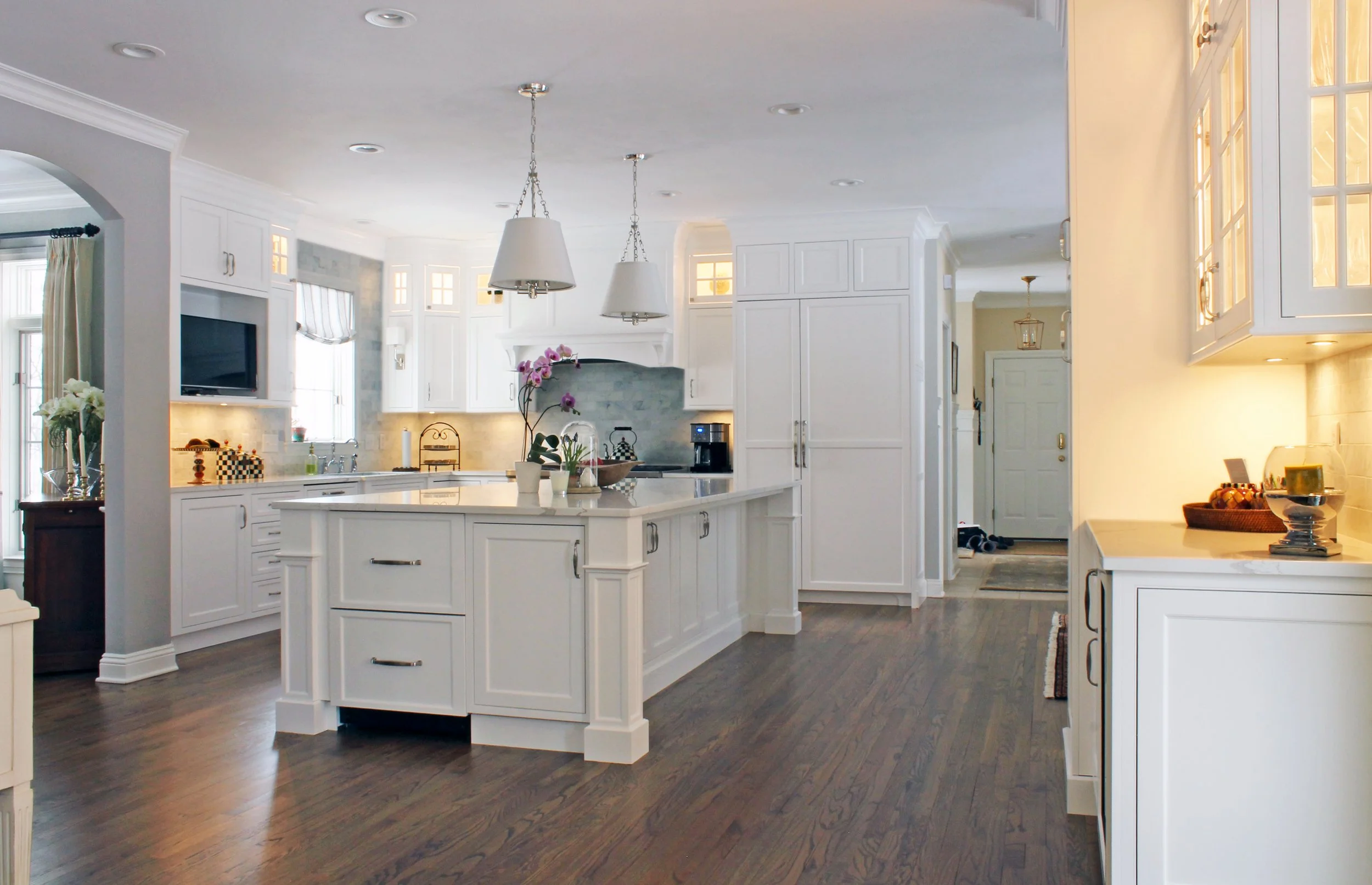
Painted cabinetry often supports the more architectural side of traditional kitchen design. Warm whites, creams, muted neutrals, deeper greens, blues, and other restrained colors can allow moldings, panels, and door profiles to read clearly without overwhelming the room.
Stained wood brings something different.
Cherry, walnut, oak, maple, and other hardwoods can add richness, variation, and a stronger connection to furniture-making traditions. The grain itself becomes part of the design.
Many traditional kitchens use both.
A painted perimeter with a wood island, for example, can give the room a natural focal point and prevent a large kitchen from feeling overly uniform.
The important consideration is not whether painted or stained cabinetry is more traditionally correct. It is how the finish supports the architecture, materials, and balance of the room.
Hardware, Countertops, and Other Materials
Traditional kitchens generally benefit from materials with some visual depth.
Natural stone can work especially well because variation and movement keep large surfaces from feeling too perfect. Quartz and other engineered materials can also be appropriate when their pattern and finish support the room rather than fighting for attention.
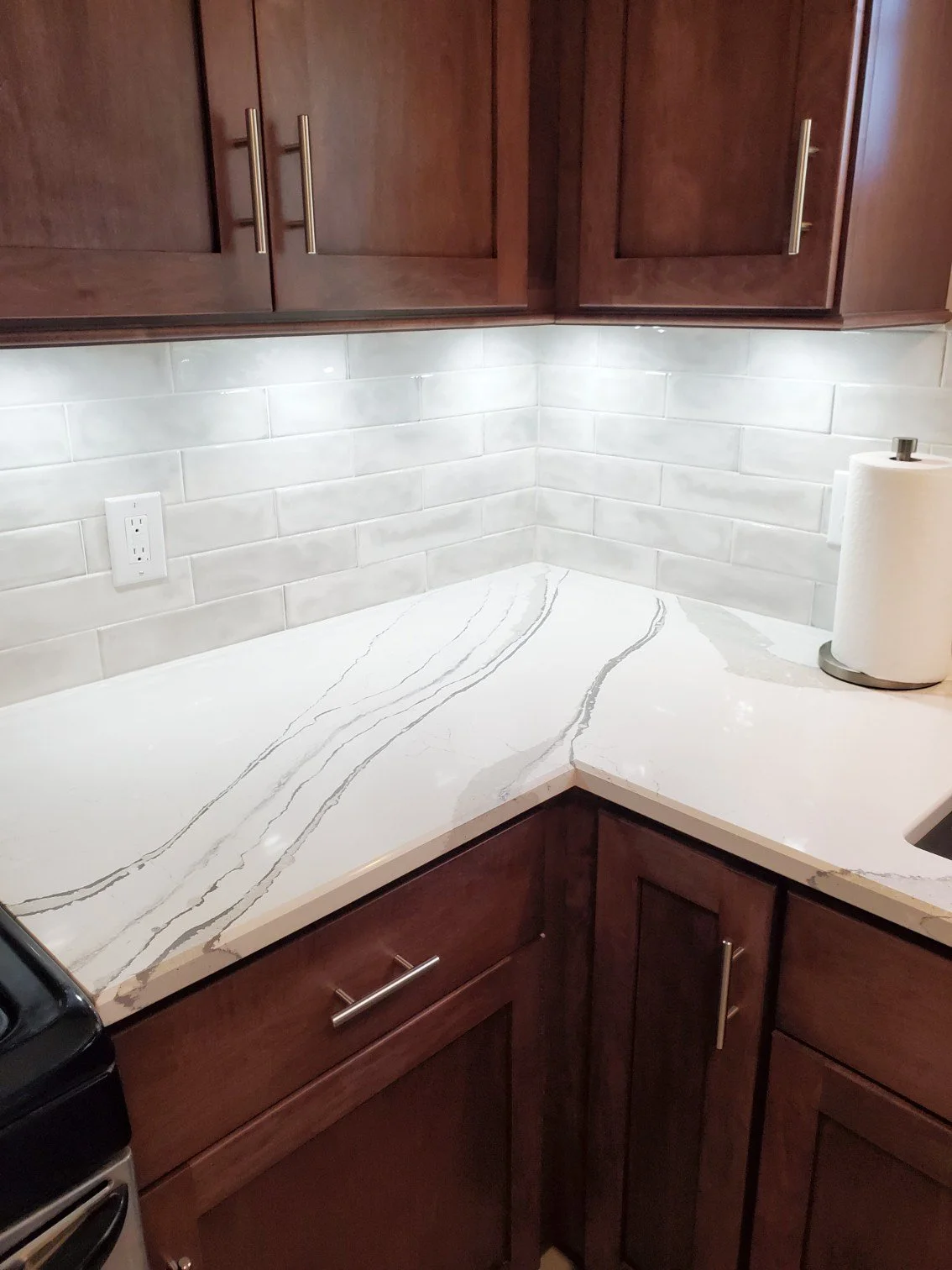
Hardware may be polished, aged, dark, warm, or understated. What matters most is scale and consistency.
The same applies to lighting.
A traditional kitchen can accommodate decorative fixtures more easily than many modern kitchens, but those fixtures should still feel connected to the architecture and overall composition.
This is where traditional design can become complicated: there are many opportunities to add character.
Good design depends on knowing when to stop.
Making a Traditional Kitchen Feel Current
A traditional kitchen does not become current by stripping away everything traditional about it.
It becomes current by editing.
That may mean simplifying crown profiles, using fewer decorative cabinet elements, choosing cleaner hardware, reducing the number of finishes in the room, or pairing traditional cabinetry with quieter lighting and countertops.
It can also mean reconsidering proportion.
Rather than filling every available inch with cabinetry, a designer might allow a window, range hood, artwork, or piece of furniture more breathing room. Instead of using decorative details everywhere, a few important moments can carry the character of the room.
The result still reads as traditional, but it feels intentional rather than nostalgic.
Where Should You Spend—and Where Can You Simplify?
Traditional kitchens can become expensive quickly because many of their defining characteristics involve cabinetry and finish details.
Custom moldings, finished ends, inset construction, furniture bases, specialty panels, integrated appliance fronts, elaborate hoods, and complex cabinet configurations all add cost.
That makes prioritization important.
If the budget is limited, spend first on the things that establish the overall architecture of the kitchen: good cabinetry, strong proportions, an appropriate door style, thoughtful elevations, and quality installation.
Decorative details can then be added selectively.
A beautifully proportioned kitchen with relatively simple cabinetry will usually feel more convincing than a poorly resolved kitchen covered with expensive ornament.
Traditional design rewards hierarchy.
Not everything has to be special for the room to feel special.
Traditional Design Should Feel Established, Not Frozen in Time
The appeal of traditional kitchen design is not that it resists change.
It is that its foundation is broader than any single trend.
Proportion, workmanship, natural materials, useful details, and a relationship to architecture have been relevant for a very long time. They give designers a stable framework within which finishes, colors, hardware, appliances, and other elements can evolve.
That is why two traditional kitchens designed decades apart can look quite different while still belonging to the same larger design tradition.
For homeowners, that flexibility is valuable.
You can make the kitchen more formal or more relaxed. More architectural or more furniture-like. Lighter and quieter or richer and more layered.
The goal is not to recreate someone else's idea of a traditional kitchen.
It is to understand what gives traditional design its sense of permanence, then decide which of those principles make sense for your house and the way you want to live in it.
A good kitchen designer can help make those distinctions.
Because the best traditional kitchens aren't successful simply because they look traditional.
They work because they look like they belong.